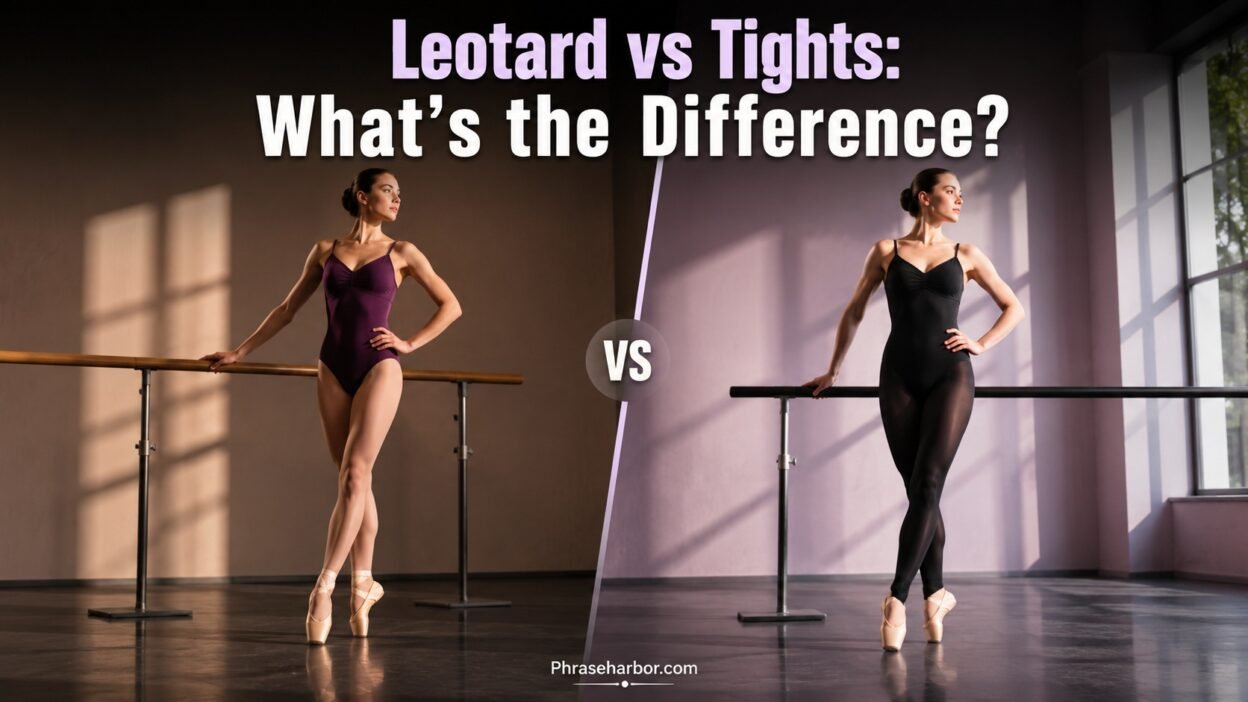
When choosing dancewear, the difference between a leotard vs tights can seem obvious at first. A leotard covers the upper body, while tights cover the legs. Yet once you start shopping for ballet, gymnastics, skating, or performance clothing, the terminology gets more complicated.
You’ll find footed tights, footless tights, convertible tights, stirrup tights, sleeveless leotards, long-sleeve leotards, unitards, bodysuits, and leggings. Some garments can even look remarkably similar.
The important point is that a leotard and tights aren’t usually alternatives. They serve different purposes and are often worn together. A ballet dancer, for example, may wear a leotard as the main upper-body garment and tights over or under it, depending on the style and dress code.
Quick Answer
The simplest way to understand the leotard vs tights difference is this:
A leotard covers the torso, while tights cover the legs.
A traditional leotard is a close-fitting, one-piece garment that covers the body from the shoulders down to the crotch. It leaves the legs exposed.
Tights are close-fitting legwear that extends from the waist down the legs. Depending on the style, tights may also cover the feet.
Here’s the basic distinction:
| Feature | Leotard | Tights |
| Main coverage | Torso | Legs |
| Garment type | One-piece upper-body garment | Legwear |
| Covers arms | Some styles | No |
| Covers feet | No | Some styles do |
| Common in ballet | Yes | Yes |
| Common in gymnastics | Yes | Sometimes |
| Worn together | Often | Often |
| Main purpose | Secure torso coverage and freedom of movement | Leg coverage, warmth, and a finished dancewear look |
So if you’re asking whether a leotard is the same thing as tights, the answer is no. They’re separate garments that can complement each other.
Comparison Overview
A closer comparison makes the distinction easier to understand.
| Category | Leotard | Tights |
| What it covers | Torso and crotch area | Legs and sometimes feet |
| Typical starting point | Shoulders or upper torso | Waist |
| Typical ending point | Crotch | Ankles or feet |
| Sleeves | Sleeveless, short, three-quarter, or long sleeve | None |
| Foot coverage | None | Footed styles cover the feet |
| Common fabrics | Cotton blends, nylon, polyester, spandex/elastane blends | Nylon, microfiber, polyester, spandex/elastane blends |
| Ballet use | Very common | Very common |
| Gymnastics use | Very common | Less universal |
| Skating use | Depends on costume design | Common in several forms |
| Everyday fashion use | Less common | Common |
| Primary benefit | Keeps the torso securely covered during movement | Provides leg coverage and creates a smooth silhouette |
| Can replace the other? | No | No |
The distinction becomes particularly important when you’re buying clothing for a class with a specific dress code.
A studio may require a particular leotard color and a particular style of tights. A gymnastics club may require a leotard without tights for training or competition. A theater production may use both garments as costume layers.
The activity determines the clothing requirement.
Main Differences Between Leotard vs Tights
The most important differences involve coverage, construction, purpose, and use.
1. A Leotard Covers the Torso
A leotard is designed around the upper body.
Traditional leotards extend from the shoulder area down to the crotch. The leg openings allow the dancer or athlete to move freely without loose fabric around the thighs.
Leotards can have several different designs:
- Sleeveless
- Short-sleeved
- Three-quarter sleeved
- Long-sleeved
- High-neck
- Scoop-neck
- V-neck
- Open-back
- Cross-back
- Racerback
Despite those differences, the basic construction remains the same: the garment forms a close-fitting layer around the torso.
That close fit matters in activities where instructors need to see body alignment. In ballet, for example, a loose shirt can make it harder to see the position of the back, hips, and shoulders.
2. Tights Cover the Legs
Tights are designed primarily around the lower body.
Most tights start at the waist and continue down the legs. Depending on their construction, they can stop at the ankle or continue over the feet.
Common styles include:
- Footed tights
- Footless tights
- Convertible tights
- Stirrup tights
The choice isn’t merely cosmetic.
A dancer who needs covered feet may choose footed tights. Someone who needs direct contact between their feet and the floor may prefer footless tights. Convertible tights provide a way to switch between covered and exposed feet without changing the entire garment.
3. They Have Different Jobs
A leotard and tights may appear together in the same outfit, but they perform different functions.
The leotard creates a secure base around the torso.
The tights provide coverage over the legs and can add warmth or create the visual line required for a particular class or performance.
This is why asking whether a leotard is “better” than tights doesn’t quite make sense. They’re not direct substitutes.
It’s similar to comparing a shirt with socks. Both belong to the same outfit, but they cover completely different parts of the body.
What Is a Leotard?
A leotard is a close-fitting one-piece garment designed to cover the torso while leaving the legs exposed.
It takes its name from Jules Léotard, a 19th-century French acrobat whose name became associated with the garment used in acrobatic performance.
Today, the term is strongly associated with dance, gymnastics, figure skating, and other performance activities.
How a Leotard Is Constructed
A typical leotard contains several important areas:
- Torso: The main body section.
- Shoulders: May use straps or sleeves.
- Leg openings: Designed to sit securely around the upper thighs.
- Crotch: Forms the lower connection between the front and back.
- Back: May be closed, open, racerback, or feature decorative straps.
Many modern leotards use stretch fibers such as spandex or elastane blended with nylon, polyester, cotton, or other fibers.
The stretch allows the garment to move with the body while maintaining its shape.
Why Dancers Wear Leotards
A leotard offers several practical advantages.
Freedom of Movement
Loose clothing can shift, bunch, or become distracting during movement. A close-fitting leotard stays close to the body.
Visibility of Technique
Instructors can see important aspects of a dancer’s posture and alignment more easily when the torso isn’t hidden beneath loose fabric.
Secure Layering
A leotard can serve as the foundation for other dancewear, including:
- Tights
- Ballet skirts
- Tutus
- Dance shorts
- Warm-up layers
- Performance costumes
Consistent Dress Codes
Many dance schools use leotard colors or styles to distinguish classes, levels, or age groups.
However, there isn’t one universal ballet dress code. Requirements vary between studios, schools, teachers, and programs.
What Are Tights?
Tights are close-fitting garments designed to cover the legs.
Unlike a leotard, tights don’t normally cover the torso. They begin around the waist and extend down toward the ankles or feet.
Tights are used in many settings, including dance, theater, skating, and everyday clothing.
Types of Tights
Understanding the different types makes the leotard vs tights comparison much easier.
Footed Tights
Footed tights cover the entire leg and continue over the feet.
They’re particularly common in ballet and other performance settings where continuous coverage from the waist through the feet is desirable.
Footless Tights
Footless tights cover the legs but stop around the ankles.
This design leaves the feet exposed.
They’re useful when the dancer needs direct access to the foot or wants to wear separate footwear without covering the feet.
Convertible Tights
Convertible tights contain an opening that allows the foot to move between covered and uncovered positions.
That makes them particularly practical for dancers who may need to switch between bare feet and covered feet during class.
Stirrup Tights
Stirrup tights extend under the foot but leave the heel and most of the foot exposed.
The fabric forms a strap beneath the foot.
This creates some of the coverage of tights while keeping the bottom of the foot accessible.
Leotard and Tights: How Do They Work Together?
One of the biggest misunderstandings about leotard vs tights comes from treating them as competing garments.
In many dance outfits, they’re actually designed to work together.
A typical combination might look like this:
Leotard → tights → optional skirt or costume layer
However, the exact layering arrangement depends on the garment design and the dress code.
For example, dancers may wear tights over a leotard when the tights are designed as an outer layer. Other dancewear combinations place tights underneath the leotard.
The right choice depends on:
- The type of tights
- The leotard design
- The studio’s rules
- The performance costume
- Personal comfort
- The activity
If you’re attending a class for the first time, follow the instructor’s dress code rather than assuming one standard applies everywhere.
Leotard vs Tights for Ballet
Ballet is probably the activity most closely associated with wearing a leotard and tights together.
A traditional ballet class may use:
Leotard + tights + ballet slippers
Some dancers may also wear a skirt, leg warmers, sweater, or other warm-up clothing before or during portions of class.
Why Leotards Are Used in Ballet
A close-fitting leotard makes it easier for an instructor to observe the dancer’s alignment.
That can help with visual assessment of:
- Shoulder placement
- Back alignment
- Hip positioning
- Torso posture
- Arm placement
- General body line
The leotard also avoids the excess fabric that can interfere with movement or obscure technique.
Why Tights Are Used in Ballet
Ballet tights provide leg coverage while maintaining a close fit.
They can also create the continuous visual line traditionally associated with ballet attire.
Different programs may require different colors, opacity levels, or styles.
There is no single tights requirement that applies to every ballet school.
Always check the specific dress code before buying several pairs.
Leotard vs Tights for Gymnastics
Gymnastics presents a slightly different situation.
The leotard is central to gymnastics clothing, particularly because gymnasts perform movements that involve jumping, tumbling, rotation, and inversion.
Loose clothing can shift during these movements, while a properly fitted leotard remains close to the body.
Are Tights Required for Gymnastics?
Not necessarily.
Gymnastics programs differ in their clothing requirements. Some may allow or require additional coverage for training, while competition uniforms often follow specific team or event rules.
A gymnast shouldn’t assume that ballet tights and a gymnastics leotard follow the same dress code.
The safest approach is simple:
- Check the gym’s written clothing requirements.
- Ask the coach if you’re unsure.
- Confirm whether tights are permitted or required.
- Check whether the program has separate training and competition uniforms.
Leotard vs Tights for Figure Skating
Figure skating uses a wider range of performance clothing.
Skaters may wear specialized costumes that incorporate elements resembling leotards, bodysuits, skirts, or tights.
Tights can provide leg coverage while helping create the polished appearance expected for performance.
Skating tights can also be designed specifically to work with skating boots. That means ordinary fashion tights aren’t automatically an equivalent substitute for skating tights.
Construction and intended use matter.
Leotard vs Tights for Theater and Performance
Theater productions frequently use both garments as costume foundations.
A performer might wear a leotard beneath a costume because it provides a secure base. Tights can then add leg coverage without creating bulky layers.
Stage costumes often prioritize appearance, movement, and durability at the same time.
For example, an acrobat may need a garment that stays securely in place through repeated movement. A dancer in a theatrical production may need tights that maintain a consistent appearance under bright stage lighting.
The costume designer’s requirements ultimately determine which garment works best.
Leotard vs Bodysuit vs Unitard
The terminology gets confusing because several garments share similar shapes.
Leotard vs Bodysuit
A bodysuit is a broader clothing term. It can describe a close-fitting one-piece garment that snaps or fastens around the crotch.
In fashion, bodysuits come in many styles and aren’t necessarily designed for dance or athletic movement.
A leotard is more strongly associated with performance, dance, gymnastics, and similar activities.
There can be overlap, though. The terms aren’t always used consistently by retailers.
Leotard vs Unitard
A unitard generally extends farther down the legs than a traditional leotard.
A simple way to remember it:
- Leotard: torso coverage with exposed legs
- Unitard: torso coverage plus leg coverage in one garment
- Tights: separate legwear
A unitard therefore combines coverage that would otherwise come from separate upper- and lower-body garments.
Read More: Accordion vs. Accordian: Which Spelling Is Correct?
Leotard vs Tights vs Leggings
Tights and leggings can look similar, but they’re not always designed for the same purpose.
| Feature | Tights | Leggings | Leotard |
| Covers torso | No | No | Yes |
| Covers legs | Yes | Yes | No |
| Usually foot coverage | Some styles | Usually no | No |
| Typical waistband | Elastic waistband | Often wider waistband | Part of garment |
| Common dance use | Very common | Depends on studio | Very common |
| One-piece torso garment | No | No | Yes |
Terminology can vary between retailers. Some brands may market very lightweight leggings as tights or use the terms interchangeably.
For dancewear, look at the actual garment construction, not just the product title.
How Should a Leotard Fit?
A good leotard should feel secure without restricting normal movement.
The fabric should remain relatively smooth across the torso. The garment shouldn’t constantly ride up or pull uncomfortably at the shoulders or crotch.
Signs of a Good Fit
- The shoulder straps stay in place.
- The torso doesn’t sag.
- The leg openings sit comfortably.
- The fabric doesn’t excessively bunch.
- You can move through the required range of motion.
- The neckline stays appropriately positioned.
Signs the Leotard May Be Too Small
- Shoulder straps dig into the skin.
- The crotch feels excessively tight.
- The neckline pulls downward.
- The fabric becomes stretched and uncomfortable.
- The garment restricts normal movement.
Signs It May Be Too Large
- The back gaps.
- The straps slide off.
- The torso has excess fabric.
- The leg openings don’t sit securely.
Torso length matters as much as general clothing size. Someone with a longer torso may need a different leotard size even if their usual clothing size suggests otherwise.
FAQs:
What Is the Difference Between a Leotard and Tights?
A leotard covers the torso and crotch area while leaving the legs exposed. Tights cover the legs and may also cover the feet.
They are separate garments and are often worn together.
Can You Wear Tights With a Leotard?
Yes. Wearing tights with a leotard is common in ballet and other dance settings.
The exact arrangement depends on the type of tights, leotard, and dress code.
Can You Wear a Leotard Without Tights?
Yes.
Gymnasts commonly wear leotards without tights, and some dance classes or performances may also allow or require a leotard alone.
Whether you should do so depends on the activity and its clothing requirements.
Are Tights Required for Ballet?
Many ballet programs use tights as part of their dress code, but requirements vary.
Some schools specify the color, opacity, and style of tights. Others may have different requirements for different classes or levels.
Are Tights Used in Gymnastics?
They can be, but they aren’t universally required.
Gymnastics clothing rules vary by club, training environment, and competition.
Conclusion:
Understanding the leotard vs tights difference is much easier once you focus on what each garment is designed to cover. A leotard covers the torso, while tights cover the legs and may also cover the feet, depending on the style.
Neither garment is necessarily a replacement for the other. In ballet and many other dance settings, they work together to provide comfortable coverage, support freedom of movement, and meet specific dress-code requirements. Footed, footless, convertible, and stirrup tights also give dancers different options based on how they use their feet during class or performance.